
Bench Warrants in McCulloch County
People say “bench warrant” when a judge orders someone picked up for missing court, ignoring an order, or leaving a judgment unsatisfied. Texas statutes for justice and municipal courts use different labels, calling the failure-to-appear procedure an “arrest warrant” and an unpaid judgment a “capias pro fine.” The label matters less than you'd think. What actually counts is the court, the cause number, and the case's current status. In McCulloch County, Brady Municipal Court warns that nonappearance or noncompliance may lead to a warrant. The countywide JP traffic letter adds another wrinkle: a missed response can affect license renewal and bring a separate Violation of Promise to Appear offense. Ask the clerk which situation fits before assuming anything about a warrant.
McCulloch County Bench Warrant Triggers
A traffic citation sets an appearance date. Skip it, and the countywide JP may take FTA action. Brady runs its own municipal process: the court page warns that failure to appear or comply can produce a warrant, and any officer contact could end in custody. District and county cases follow whatever order the hearing court entered. The JP traffic reply form tells you to read both sides and lays out payment, plea, and safety-course routes for those who qualify. The steps vary by case. Don't assume a Brady portal balance answers a McCulloch County JP question, because the two courts work separately.
How a Bench Warrant Is Issued
The issuing judge or magistrate acts under the law that governs that court and case. Texas Chapter 45A sets out the failure-to-appear and capias-pro-fine procedures for justice and municipal courts. Under the initial-setting FTA rules, notice is required, and in the situations the law describes, a person gets a chance to appear and make a good-faith effort before the warrant is executed. Felony and district causes run through the District Court and District Clerk on a separate track. A clerk can identify the filed action. The court alone decides whether a new setting or recall is available. The sheriff in McCulloch County may serve the order and hold custody information, but that office is not the issuing court, and only the issuing court controls its own warrant.
McCulloch County Warrant Court Structure
McCulloch County runs one countywide Justice Court, with a single constable serving at large. Brady keeps a separate Municipal Court for city ordinance and Class C matters. Felonies go to the 452nd District Court, while the constitutional County Court handles the county-level criminal jurisdiction state law assigns it. The addresses and case files differ, so the court name on the citation is your routing key. The Texas Judicial Branch court overview explains how the court levels fit together, and the local order confirms the countywide JP structure.

The chart supplies the statewide court-level context, but the McCulloch court named in the cause still controls its own warrant.
Bench Warrant vs Arrest Warrant
The two terms overlap in conversation, yet they mark different parts of the court process. Ask the clerk which statute and order apply in McCulloch County.
| Question | Bench or FTA Warrant | Arrest Warrant |
|---|---|---|
| Typical trigger | Missed setting, noncompliance, or an unsatisfied court judgment. | Probable-cause complaint or another legal arrest command. |
| Who controls it | The court that required appearance or compliance. | The magistrate or court that signed the order. |
| First call | Brady Municipal Court, countywide JP, or the court on the notice. | Issuing court or clerk, then the Sheriff for county service/custody. |
| Possible next step | New setting, appearance, hardship process, payment, or recall. | Attorney-guided appearance, bond, or motion as allowed. |
McCulloch County Capias Pro Fine Warrant
A capias pro fine grows out of a court judgment, not an ordinary ticket. It issues when fines or costs stay unpaid or unsatisfied after the case ended. Chapter 45A requires the writ to state the judgment and the sentence amount. That makes it different from a simple citation balance or a fixed countywide bond, so don't guess. The Brady and JP courts in McCulloch County can explain which amount and process fit their own cases. The statute also builds in hardship and good-faith voluntary-appearance routes before execution, in the circumstances it names. Ask the issuing court how to give notice, whether a hearing is required, and whether the court can recall the capias after a voluntary appearance.
How to Resolve a McCulloch County Bench Warrant
Work through the office that issued the order. McCulloch County publishes no walk-in docket, bond table, or surrender hours on a public page. Ask where the appearance must happen and what the court requires before you go to a court or the jail.
- Gather the legal name, date of birth, citation or cause number, and court name.
- Call the issuing clerk and ask whether the warrant is active, served, recalled, or replaced by a new setting.
- Ask whether voluntary appearance, a reset, payment plan, hardship hearing, or motion is available.
- If the Sheriff holds the warrant, call 325-597-0639 for custody and surrender instructions; no current hours are posted.
- Keep the court receipt or order and ask when the Sheriff and DPS/OmniBase will receive any update.
Do not guess at the next step. The county has no posted walk-in or bond-window schedule, and an online payment does not prove that a warrant was recalled.
Which McCulloch County Court Issued It
A Brady ordinance or city citation belongs to Brady Municipal Court, at 325-597-2156. County traffic and JP matters go to Justice Court, 325-597-2156 not included; call 325-597-8000 ext. 1. District-court papers belong with the District Clerk at 325-597-0733 ext. 1, and county-court routing runs through the County Clerk or County Judge. The clerk pages list different addresses and office hours, so check the right one before visiting McCulloch County offices.
The Texas court directory can help identify a McCulloch County court's official listing; it is not a warrant-status search.
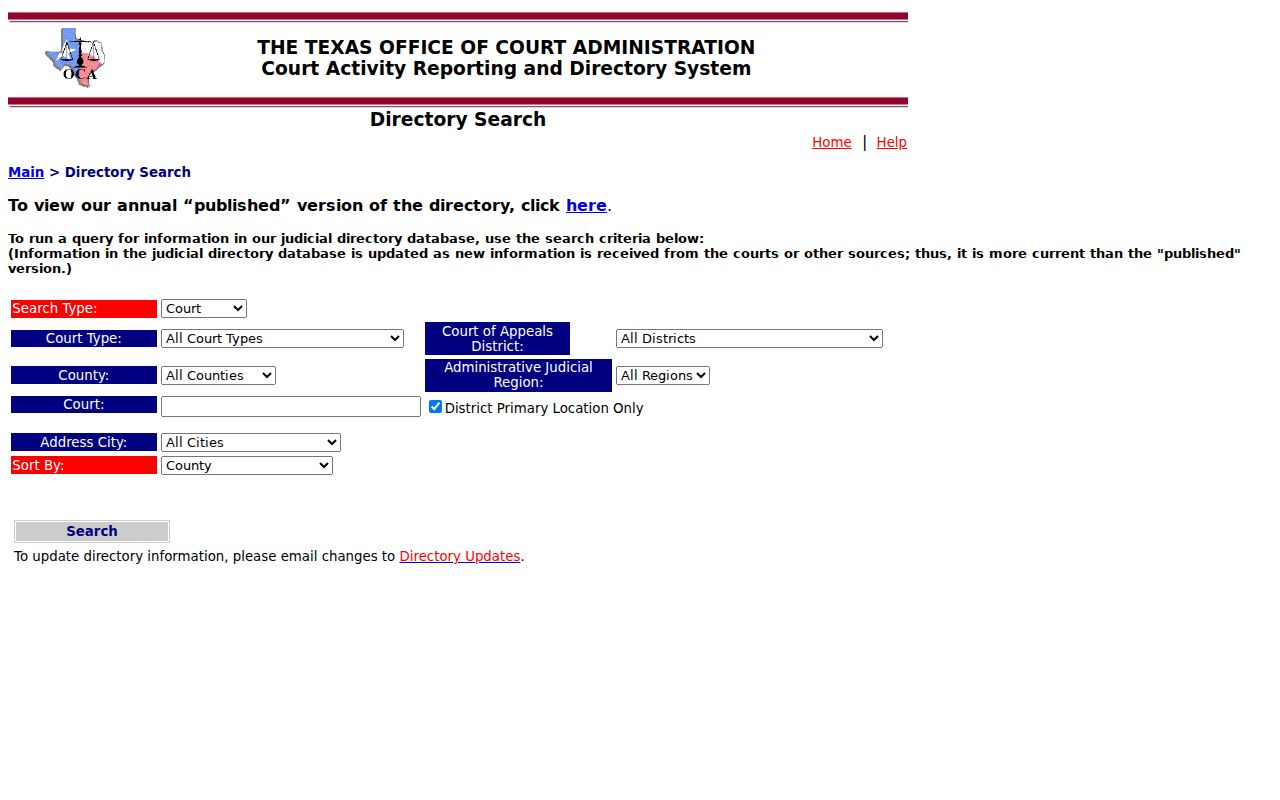
The directory identifies courts and offices; for the cause and current status, call the issuing McCulloch County clerk.
McCulloch County Bench Warrant Recall
Recall, quash, satisfied, served, and paid are different case events. A warrant can be withdrawn while the case stays open. Someone released on bond still owes the court a future date. Ask the clerk which entry records the change and whether another office must update its system too. McCulloch County's published dockets don't carry a complete set of warrant-status codes. Keep the signed order, the docket entry, any receipt, and any instruction about a new setting. One more thing: if an FTA/FTP report touched a license renewal, DPS says a reported item can take up to seven business days to clear after the court acts.
McCulloch County Public Warrant Records
McCulloch County opens its records under the Texas Public Information Act, though each court adds its own rules. Active-investigation details can be withheld. Juvenile arrest-warrant papers stay confidential under Texas Family Code section 58.010. No McCulloch County office posts a person-level bench or capias record online. Expect gaps in any warrant lookup. For a cause you can name, ask the court directly about non-sealed files. If a warrant might apply to you, the county overview's resolution steps walk through the sheriff, clerk, and court confirmation sequence.